
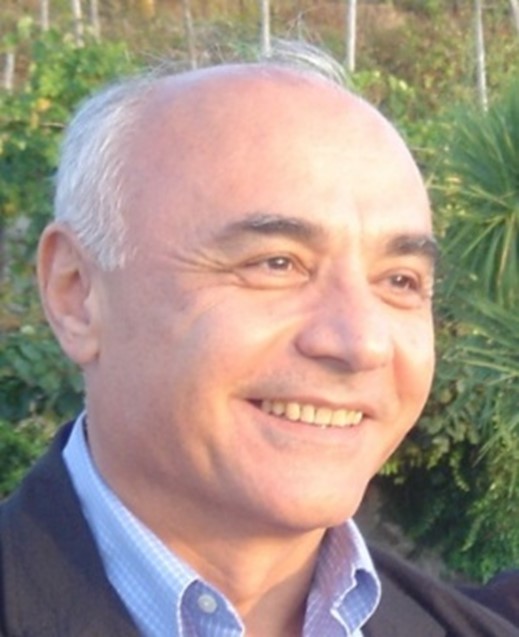
Dr. Ömer L. Gülder — Professor at the University of Toronto Institute for Aerospace Studies (UTIAS)
Dr. Ömer L. Gülder has been a Professor at the University of Toronto Institute for Aerospace Studies (UTIAS) since 2001. Prior to joining UTIAS, he served as a scientist and subsequently as Section Head of the Combustion Laboratory at the National Research Council of Canada. Dr. Gülder received his PhD from the University of Manchester, United Kingdom, and his undergraduate and MSc degrees from Middle East Technical University, Türkiye. His research interests encompass high-pressure combustion, soot formation, turbulent combustion, aviation fuels, and effects of fuel and soot characteristics on contrail formation. Dr. Gülder has authored more than 175 journal publications in the field of combustion and has served on the editorial boards of Combustion and Flame, the International Journal of Thermal Sciences, and the International Journal of Engine Research. He is also a co-inventor on three patents related to non-intrusive soot diagnostics. In addition to his fundamental research in combustion and propulsion, Dr. Gülder actively contributes to industrial research programs in collaboration with major gas turbine engine manufacturers in Canada. He is a Fellow of the Canadian Academy of Engineering and the Combustion Institute, as well as an Associate Fellow of the American Institute of Aeronautics and Astronautics (AIAA).

Prof. Frédérique Battin-Leclerc — CNRS research director, Nancy, France
Frédérique Battin-Leclerc obtained her PhD from the University of Nancy in 1991. She has since worked at the same institution as a CNRS researcher, investigating the detailed kinetic mechanisms involved in modelling complex gas-phase reactions, with a particular focus on the combustion of transportation fuels and biofuels. She was an invited researcher at AEA Technology in Harwell, UK (1993) and at NOAA in Boulder, USA (1997). She has over 200 publications. Her awards include an ERC Advanced Research Grant in 2008, a CNRS Silver Medal in 2010, the 2022 Polanyi Medal of the Royal Society of Chemistry and the 2026 Alfred C. Egerton Gold Medal of the Combustion Institute.
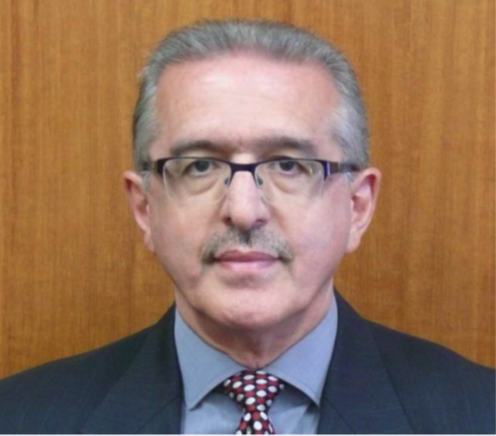
Professor Assaad Masri — The University of Sydney
Professor Assaad R. Masri has received his PhD and BE Honours with the University Medal from the University of Sydney. Between 2011 and 2016, he has held a prestigious Australian Professorial Fellowship awarded by The Australian Research Council. He serves as Chairman of the Australia and New Zealand section of the Combustion Institute and President-Elect of the International Combustion Institute. Masri has published over 230 journal papers and won several awards including the prestigious Silver Medal of the Combustion Institute in 1986 and 2026, and the Jurgen Warnatz Gold Medal of the Combustion Institute (2018). He was elected Fellow of the Combustion Institute in 2017 and has served its Board of Director and as Program Co-Chair for the 36th Combustion Symposium in Seoul, 2016 Professor Masri’s research lies in the broad area of efficient energy conversion technologies with a focus on green and renewable fuels. He has led pioneering research in the turbulent combustion of gaseous fuels, dilute and dense spray flames, and atomization processes. His innovations in the design of burners that embody specific research issues such as turbulence-chemistry or droplet-turbulence interactions have advanced knowledge in these fields and continue to serve industry in the development of future combustors.
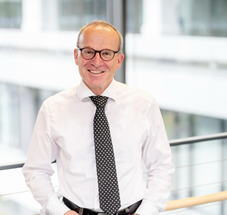
Prof. Dr.-Ing. Viktor Scherer — Ruhr University Bochum — Faculty of Mechanical Engineering Chair of Energy Systems and Energy Process Engineering Germany
Prof. Dr.-Ing. Viktor Scherer is Head of the Institute of Energy Plant Technology at Ruhr University Bochum, Germany, where he has been a full professor since 2000. He studied Mechanical Engineering at the University of Karlsruhe (now KIT) and received his PhD in 1989. Before joining academia, he held senior positions at ABB and Alstom in the power plant sector, gaining extensive industrial experience in energy and combustion technologies. His current research focuses on industrial high-temperature processes, particularly in the steel, lime, and cement industries, and on the use of alternative fuels such as biomass, refuse-derived fuels, municipal waste, and metal-containing fuels. Prof. Scherer has also held leadership roles in major DFG Collaborative Research Centres, including CRC/TRR 129 Oxyflame and CRC/TRR 287 BULK-REACTION.